Thursday, May 30, 2013

Fwd: Aves


---------- Forwarded message ----------
From: Bobrowicz, Jakub <jakub.bobrowicz@hanovernorwichschools.org>
Date: Thu, May 30, 2013 at 11:57 AM
Subject: Aves
To: thermanson1.vertabrates@blogger.com


Aves are feathered, winged, endothermic, bipedal vertebrates, more commonly known as birds. Most are able to fly, and all lay yolked, hard shelled eggs, and have a strong, light skeleton.

Fwd: Bony fish


---------- Forwarded message ----------
From: Lukovits, Karina
Date: Thursday, May 30, 2013
Subject: Bony fish
To: thermanson1.vertibrates@blogger.com


Bony fish (Osteichthyes) have bone instead if cartilage for their skeletons. The majority of fish fit into this category, making it the largest class and very diverse. They can therefore live in many places (freshwater and marine environments). They have a stable pattern of cranial bones and many have swim bladders. Examples are swordfish and tuna. 

Image: http://en.m.wikipedia.org/wiki/File:Blue_runner.jpg

Amphibia

Inline image 1
Undergo metamorphosis after birth, changing from larva into adults — exchange gills for lungs
Early ancestors of all tetrapods
Spawn form eggs, some containing green algae

Examples: frogs, salamanders

Phylum Chordata


Phylum: Chordata

  • Includes humans & other vertebrates
  • FOUR defining features:
    • 1). A dorsal, hollow nerve chord.
    • 2). A notochord, a flexible, supportive, longitudinal rod located between digestive tract & nerve cord.
    • 3). Pharyngeal slits located in the pharynx (region just behind the mouth).
      • Sometimes used as gills
  • 4). A muscular post-and tail (a tail posterior to the anus).

  • Deuterostome animals
  • Subphyla: mammals, fish, amphibians, reptiles, birds
  • Also include lancelets & tunicata
  • Echinoderm are chordates closest relatives
  • Consists of vertebrate & invertebrate animals

Chordata chondrichthyes

Chondrichthyes, more commonly known as cartilaginous fishes, are part of the phylum chordata. Their most distinguishing feature is that they have no bones in their body. Instead, they are comprised of completely cartilage. Other defining features include: jaws, paired fins and nostrils, scales, and chambered hearts. The most well-known cartilaginous fishes are sharks, but other species include rays, skates, and the interesting barrel-eyed fish.

Agnatha

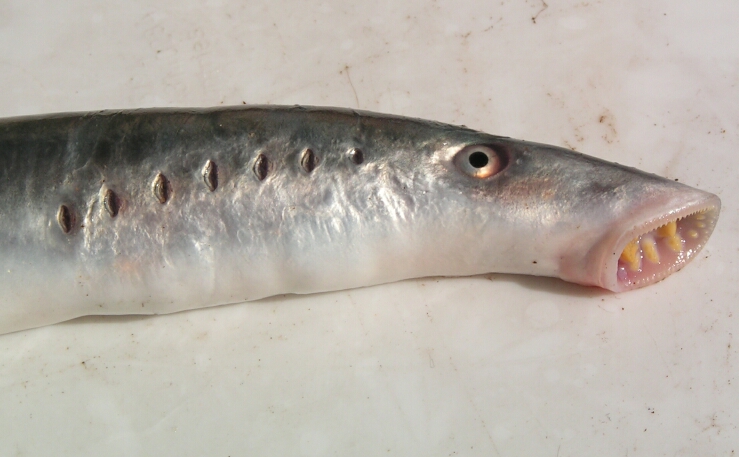
Image: http://upload.wikimedia.org/wikipedia/commons/3/3f/Lampetra_fluviatilis.jpg

Information: http://en.m.wikipedia.org/wiki/Agnatha 

Distinguishing features:
No jaws, no paired fins, have seven or more gill pouches, no identifiable stomach or appendages. 

Examples:
Hagfish, lampreys


Molly and Julia 

Reptilia


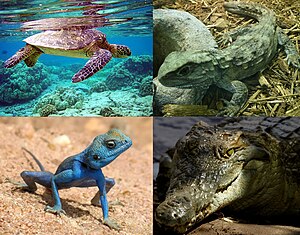
Amniotes- eggs have an amnion (double membrane) that permits embryo to breathe on land. Cold blooded, have scutes (external plate) or scale, tetrapod (4 legs), most are oviparous (egg laying). 
Info:

Mammalia - Monotremes


Monotremes are mammals that lay eggs, are warm-blooded, and produce milk to feed their young. They are the most primitive mammals. They only live in Australia and New Guinea. They only have one hole for urinary waste, reproduction, and solid waste. Monotreme means "one-holed."

From,

Sarah Kohl and Katrina Wheelan
HAGFISH

Common Name: "no jaws"
Distinguishing features: Agnatha are characterized by lacking a jaw and by having a notochord (a flexible rod-shaped body) in both larvae and in adults. They also lack paired fins and they have seven or more paired gill pouches. They are cold blooded, and they have a cartilaginous skeleton. Agnatha do not have an identifiable stomach or any appendages. Fertilization and development are both external and their heart contains 2 chambers.
Examples include hagfish and lampreys. 

Fwd: agnatha


---------- Forwarded message ----------
From: Lynch, Benjamin <benjamin.lynch@hanovernorwichschools.org>
Date: Thu, May 30, 2013 at 10:37 AM
Subject: agnatha
To: thermanson.1.vertebrates@blogger.com


HAGFISH

Common Name: "no jaws"
Distinguishing features: Agnatha are characterized by lacking a jaw and by having a notochord (a flexible rod-shaped body) in both larvae and in adults. They also lack paired fins and they have seven or more paired gill pouches. They are cold blooded, and they have a cartilaginous skeleton. Agnatha do not have an identifiable stomach or any appendages. Fertilization and development are both external and their heart contains 2 chambers.
Examples include hagfish and lampreys. 

Amphibians

Phylum: Chordata

Class: Amphibia

Common Name: "living both in water and on land"

Distinguishing Features: 
- ectothermic- obtains heat from outside the body or cold blooded. 
- tetrapods- "four-footed
- uses skin to breathe by diffusion 
- has gills then goes through metamorphosis and obtains lungs

Example:

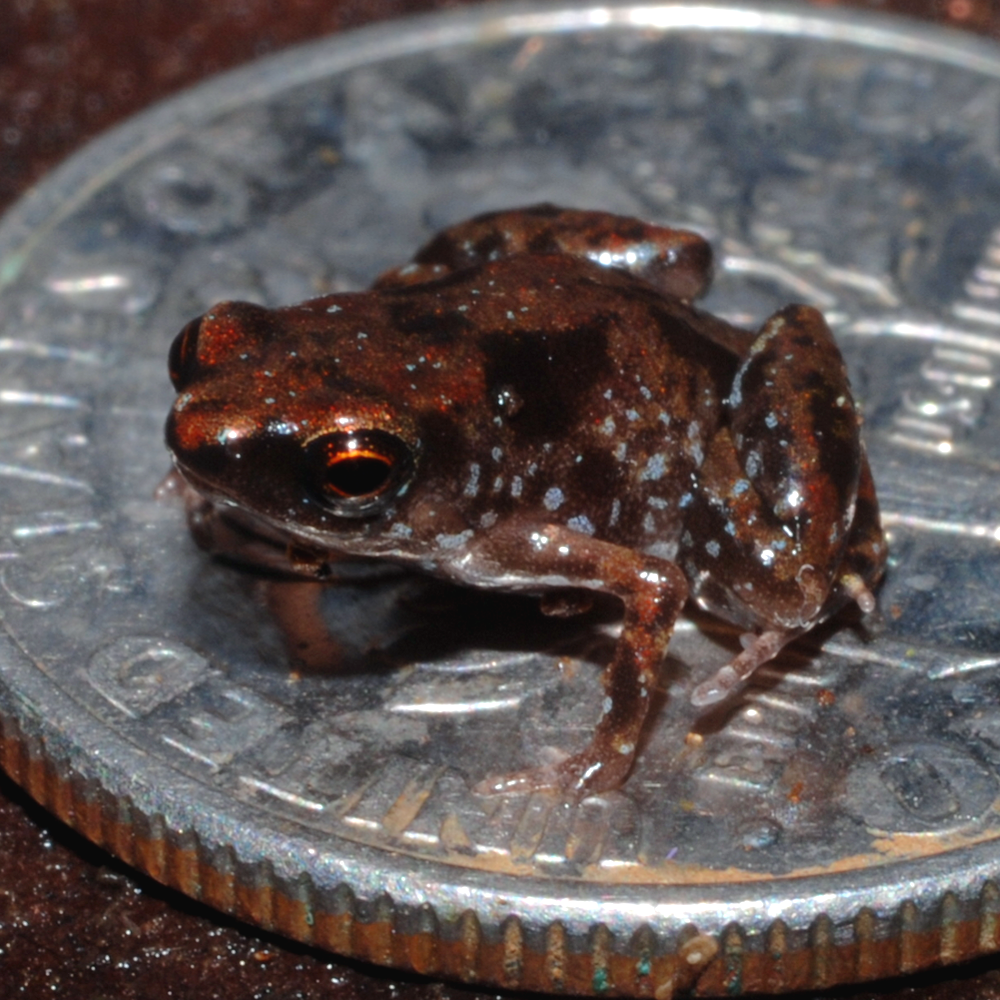
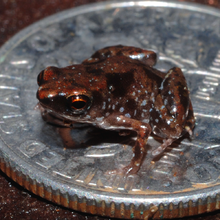
(in comparison to a U.S dime)

Paedophryne amauensis- the world's smallest frog.

Bony fish (Osteichthyes)

Class: Osteichthyes

Distinguishing Features:  
Lower jaw connected to head in one piece
Eyes supported by a sclerotic ring of four small bones
Head and pectoral girdle covered in large dermal bones
Support fin with bone fin rays
Mucus gland to coat body

Examples:  ocean sunfish, Atlantic blue marlin, giant grouper, lungfish, dwar

Our video is a lungfish, a unique type of bony fish in the sub category of actinopterygii, or ray finned fish.  It has developed primitive lungs and can remain out of water for extended periods of time.

mamalia- placentals

Placentals give birth to live, well developed young. The fetus is nourished by the placenta during development.  Also, placentals have a wide opening at the bottom of their pelvis which allows them to birth to these more developed young.  They also lack epipubic bones, and have differences in the bone structure of their feet and jaw.


Mamalia - Marsupials

Common Name: Marsupials

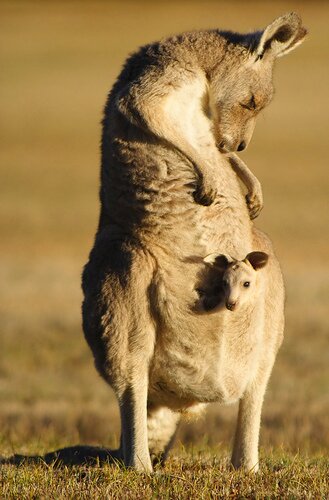
Distinguishing Features: Marsupials have hair, nurse their young, and give birth to relatively undeveloped young that are then carried by the mother for a period of time until it fully develops. They have pouches for giving birth and carrying their young. Marsupials lack a complex placenta, and their placenta is short-lived. Primarily, they live in the Southern Hemisphere. 

Monotremes

The common name for monotreme is "single hole". This class includes platypi and echidnas.

Some of the defining features of monotreme include laying eggs instead of live birth, lacking a corpus callosum (which connects the two hemispheres of the brain), and having only one hole for reproduction, urination, and defecation. Monotremes are the only mammals that lay eggs, but the egg remains inside the female for some time in order to be nourished. When the baby platypus hatches, it is fed by milk from it's mother.

Here is a video of an echidna walking:
http://youtu.be/980mzboCctg

Chordata

Chordates all have:
 A bilateral body plan.
Notochord, (stiff rod of cartilage that extends along the inside of the body) Sometimes would develop into a spinal chord
A dorsal neural tube. (Spinal cord)
Pharyngeal slits. 
Post-anal tail. A muscular tail that extends backwards behind the anus.
An endostyle. This is a groove in the ventral wall of the pharynx. In filter-feeding species it produces mucus to gather food particles.

Cartilaginous Fishes

Cartilaginous Fishes, scientifically named: Chondrichthyes
Phylum: Chordata
Distinguishing Features: jawed, paired fins, skeleton made of cartilage, no ribs (if they leave water, their body weight will crush their internal organs), no bone marrow - spleen makes RBC's, skin covered with dermal teeth, breath through 5-7 gills, mostly live births.

Examples: Saw Shark, Guitar Fish, Torpedo Electric Ray - can generate up to 200 volts!!


---
FC and AT

Reptilia


Phylum/Common Name
Class
Distinguishing features
examples
Reptile/Crawling-
tiles
Reptilia
• lay eggs (protected by amnion)
• reptiles incubate their eggs in sand, dirt or gravel while amphibians incubate their eggs solely in water
• not mammal or bird
• tetrapod vertebrate
• ectotherm
• scales (horny epidermis) creates a watertight seal and protects from drying out. This is the reason reptiles can live on land, unlike amphibians
• dinosaurs were part of the reptile class before extinction
•3 or 4 chambered heart
•5 toes
•lungs instead of gills (can breath on land)

Boa Constrictor
Crocodiles

source of information: 
http://www.entomology.cornell.edu/cals/entomology

The Venom Chronicles: Platypus Tales | Inside NOVA | PBS

This article talks about the venom of the platypus. An example of
coevolution of venom similar to a reptile. Very cool.

http://www.pbs.org/wgbh/nova/insidenova/2011/03/the-venom-chronicles-platypus-tales.html

Chordata, Aves

Chordata, Aves
Common name: birds

Description:
Endothermic
Vertebrate
Feathered
Winged
Egg laying
Light weight, strong skeleton 
4 chambered heart
Beak, no teeth

Examples: penguin, peacock, flamingos